Direct answer
The Torts (Interference with Goods) Act 1977 is the main statute that lets a person who holds someone else’s goods, such as a landlord holding a former tenant’s belongings, deal with them when the owner cannot be traced or does not collect them. As generally understood, it does not set one fixed number of days for every case. Instead it expects you to take reasonable steps to find the owner, give written notice of an intended sale with a clear date, act in good faith, sell for the best price reasonably available and account for the proceeds less your costs. The details depend on the facts, so check the legislation on legislation.gov.uk, GOV.UK guidance and take legal advice before selling or disposing of valuable items. This is not legal advice.
Contents
- What the Act is and why landlords hear about it
- What the Act does not do
- Why a landlord may count as a bailee
- Duties of a bailee in plain terms
- How long must you keep the goods?
- Factors that affect what is reasonable
- Taking reasonable steps to trace the owner
- Keeping a contact log
- The notice of intended sale
- Sending the notice properly
- Storage costs and reasonable care
- Insurance and security
- Selling the goods
- Choosing how to sell
- What happens to the sale money
- Accounting for the money
- Low-value goods and rubbish
- Deciding what is low value
- Applying to the court
- When going to court is worth it
- What a tenant should know
- Collecting your belongings
- Disposing of what remains
- Receipts to keep
- A summary of the safe approach
- A short landlord checklist
- Frequently asked questions
What the Act is and why landlords hear about it
A statute about wrongful interference with goods.
The Torts (Interference with Goods) Act 1977 deals with claims where someone wrongfully interferes with another person’s goods, for example by destroying, selling or refusing to return them. It also sets out a process that allows a person who holds goods to sell them in certain circumstances if the owner does not collect them.
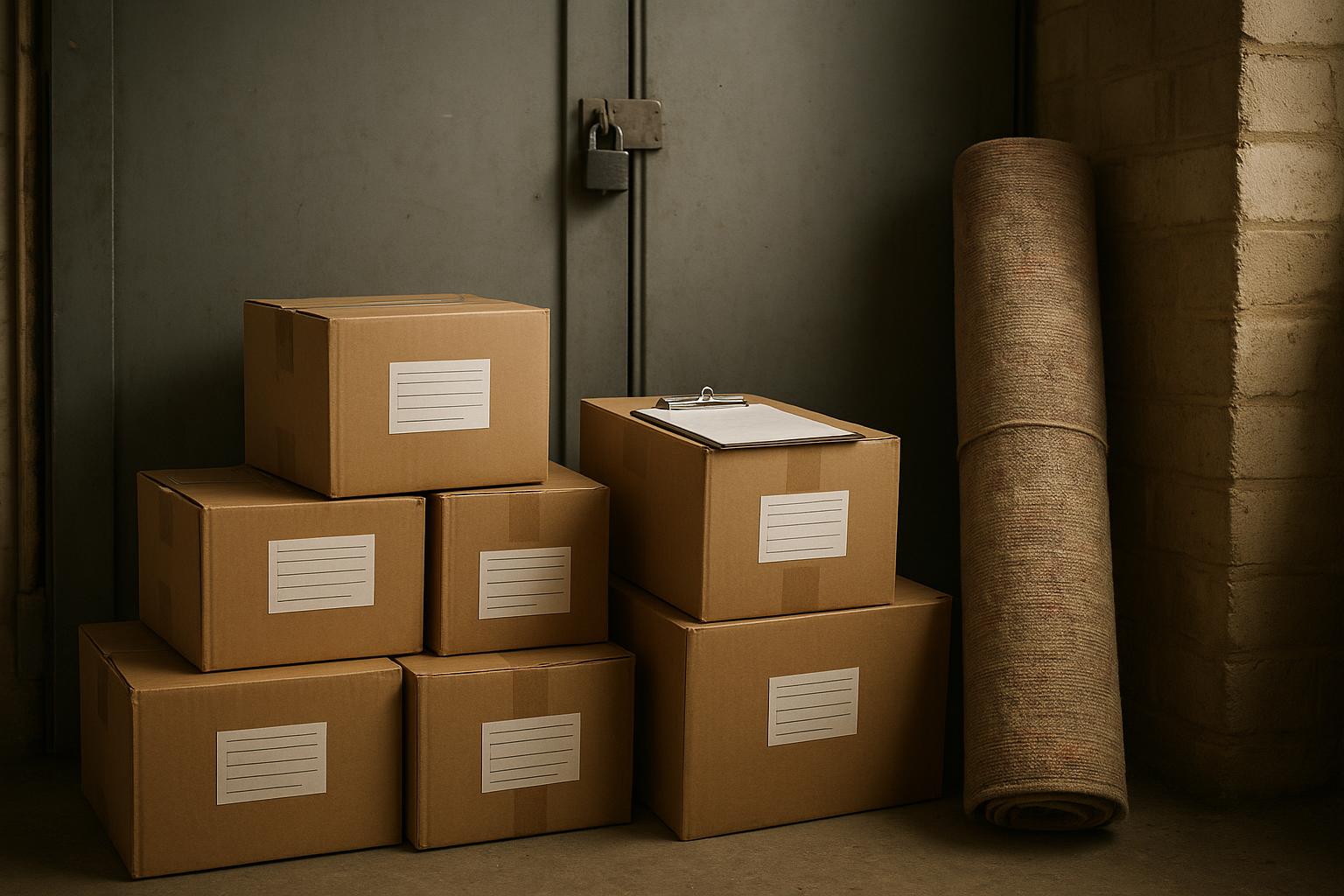
Landlords hear about it because tenants sometimes leave belongings behind. If a landlord takes those goods into their care, they can find themselves in the position of holding another person’s property, which is where the Act becomes relevant.
This guide covers the main principles for landlords in England and Wales. It is general information, not legal advice, and the Act’s wording and case law matter, so read it on legislation.gov.uk and take advice for anything valuable. Our wider guide on what a landlord should do when a tenant leaves belongings covers the steps before this one.
What the Act does not do
Know its limits.
The Act is not a licence to take or keep a tenant’s goods as security for rent. It does not replace the rules on how a tenancy ends, and it does not remove a landlord’s duty to act reasonably. It sits alongside the law on possession and unlawful eviction.
It also does not cover every type of dispute over goods. Questions of ownership, such as whether an item belonged to the tenant or the landlord, need to be settled on the evidence, such as the inventory and receipts.
Treat the Act as one part of a wider process that starts with confirming the tenancy status.
Why a landlord may count as a bailee
Holding goods for someone else.
In law, a bailee is someone who has possession of another person’s goods with the owner’s agreement, or takes responsibility for them, without becoming the owner. A landlord who takes in a former tenant’s goods for safekeeping can fall into this category.
Bailees owe duties, including taking reasonable care of the goods. They also have certain rights, such as the right to charge storage costs in some circumstances and the right, under the Act, to follow a process for selling uncollected goods.
Whether a landlord is a bailee in a given situation depends on the facts, such as whether the tenant agreed to the goods being kept or the landlord took them into possession. That is one reason to get legal advice if the items are valuable or the facts are unclear.
Duties of a bailee in plain terms
What you should do.
- Keep the goods safe, dry and separate from other property.
- Do not use the goods yourself.
- Do not sell or dispose of them without following a proper process.
- Keep records of what you hold and where.
- Be ready to hand them over to the owner on request, subject to any lawful claim for costs.
Ask a solicitor if you are unsure whether you are a bailee, as the answer can depend on how the goods came into your hands.
How long must you keep the goods?
There is no single fixed period.
Many landlords search for a standard number of days. As generally understood, the Act does not impose one fixed minimum holding period for every case. Instead it requires you to give notice of your intention to sell, with a stated date, and to allow a reasonable time for the owner to collect.
What counts as reasonable depends on the circumstances: how valuable the goods are, how bulky, how easy it is to contact the owner, and how much it costs you to store them. A bag of low-value clothing and a set of valuable electronics may call for different approaches.
Some landlord associations and advice sites suggest allowing a number of weeks to be safe, and if the goods have value or sentimental importance a longer period is more defensible. Check current guidance from GOV.UK, a landlord association or a solicitor for the figure that suits your case.
Factors that affect what is reasonable
Think about the facts.
- Value: higher value means a longer, more careful process.
- Bulk: large items cost more to store, which affects what is proportionate.
- Contact: the easier the owner is to reach, the more you should expect them to respond.
- Sentimental importance: photos and keepsakes deserve extra time.
- Your own costs: storage and handling can be claimed in some cases if reasonable.
Write down why you picked the period you did. That note can be useful if someone later asks why you chose that deadline.
Taking reasonable steps to trace the owner
The first requirement.
Before you can rely on the sale procedure, you generally need to show that you tried to find the owner, or that the owner has failed to take delivery of the goods. In a landlord situation, that means contacting the former tenant at the last known address, a forwarding address, by email, phone and through any guarantor or emergency contact.
Keep a log of each attempt, including the date, the method and the result. Keep copies of letters and proof of postage. This record is evidence that you acted reasonably.
If you have no way to contact the tenant, a tracing service, or a note on the tenant’s deposit scheme file, can form part of a reasonable effort. Do not simply assume the owner has no interest because they have not replied.
Keeping a contact log
Simple and effective.
A table with columns for date, method, address or number used and result is enough. Add a column for what you said, with a short summary. Print or save copies of emails and text messages.
If a letter is returned undelivered, keep the envelope. It shows that you tried and that the address no longer works.
This log will form the backbone of any evidence you give later.
The notice of intended sale
What it should contain.
Under the Act, if you want to rely on the sale provisions, you normally need to give the owner written notice of your intention to sell. In general, this notice should identify you, describe the goods, say where they are held and state a date after which you intend to sell them if they are not collected.
The notice should be sent in a way you can prove, for example recorded delivery to the last known address, supplemented by email or other methods. Keep a copy and any proof of delivery. Where the owner cannot be traced, courts have considered what reasonable steps look like, so the more you can show, the better.
Take care not to set the deadline too soon. If a court later decides that the time you gave was not reasonable, your right to sell could be challenged. A solicitor can check the wording of a notice before it goes out.

Sending the notice properly
Proof matters.
Use recorded or special delivery for the main copy, and keep the receipt. Send a copy by email and text if you have the details, and attach a copy to the door of the property if appropriate.
If the notice is returned or ignored, keep it unopened as evidence. Do not rely on a verbal conversation alone.
Diary the date by which you said the goods would be sold and do not act before it has passed.
Storage costs and reasonable care
You must look after the goods.
While you hold the goods, you are generally expected to take reasonable care of them. That includes keeping them dry and secure and not mixing them with your own property. If goods are damaged through your carelessness, you could be liable.
Storage can cost money, particularly in London. You may be able to claim reasonable costs of storage from the owner or deduct them from any sale proceeds, but you should keep invoices and be ready to show that the costs were reasonable. A claim for very high storage fees on items of low value is unlikely to look fair.
If the cost of storing goods is likely to exceed their value, that is a good reason to take legal advice early, because there may be a quicker, lawful way to resolve it. Our guide on storage unit costs in London gives a sense of the practicalities.
Insurance and security
Protect what you hold.
Check whether your landlord insurance or a storage provider’s policy covers goods belonging to someone else. Many policies exclude them or limit cover, so ask before you move anything.
Choose a place that is dry, locked and not shared with others’ goods, and avoid damp garages and open sheds. Keep a record of who has access.
If goods are damaged while in your care because of a leak or a break-in, record it and tell your insurer promptly.
Selling the goods
Good faith and best price.
If you have followed the proper process, you may sell the goods, but the sale needs to be conducted in good faith and in a way that gets the best price reasonably obtainable. That does not mean a perfect price, but it does mean not selling to yourself or friends at a very low value.
For valuable items, consider an independent valuation or sale through an auction or reputable dealer, and keep records of the price and the buyer. For lower-value furniture, donation or recycling may be sensible, but check whether you are entitled to dispose of them in that way.
Our guide to chattel valuation explains how valuers approach household goods, even though it is written for estates.
Choosing how to sell
Fair routes.
For modest sums, an online sale with a clear listing and a record of the winning bid is a transparent route. For higher-value items, an auction house or a specialist dealer may achieve a better price and give you evidence of a fair sale.
Avoid selling to relatives, to people connected with you or at a price that you could not justify later. Keep the listing, the receipts and the payment record.
If you are unsure about an item, get a written valuation first.
What happens to the sale money
Account for it.
After a lawful sale, you are generally expected to account to the former owner for the proceeds, less the reasonable costs of storing and selling the goods and any proper debts you are allowed to deduct. Keep the money identifiable and do not simply add it to your own funds.
Whether you can set the proceeds against unpaid rent is a point to take advice on. Treating the goods as security for a debt is not automatic, and an attempt to do so without a proper basis could be challenged.
Keep a clear record of costs, receipts and the date and amount of the sale. If the owner reappears, you will need to show what happened to the goods and the money.
Accounting for the money
Be transparent.
Prepare a short statement showing the sale price, the costs you deducted and the balance. Offer it to the former tenant with the balance, or hold the balance securely and tell them where it is.
If you cannot find the tenant, keep the money and the records, and take advice about how long to hold it and what to do next. Do not simply spend it.
A clear statement makes it harder for anyone to say that you profited from the goods.
Low-value goods and rubbish
A different judgement.
Items that clearly have no resale value, such as broken furniture, damaged mattresses and household rubbish, are often treated differently in practice from valuable goods. Even so, you should photograph them, note what they were and consider including them in your notice.
Do not decide that everything is worthless without a record. An item that looks like rubbish to you may have value, such as a tool, a bicycle or a box of old photographs.
Where items are hazardous or a health risk, you may need to dispose of them quickly. Document this and, where possible, take photographs before disposal. Our guide to hazardous waste classification explains what to look out for.
Deciding what is low value
Be cautious.
A cheap flat-pack table might be low value, but a collector’s item may not be. If you are unsure, photograph it and ask a dealer or check what similar items sell for.
Documents, electronics and anything with data should not simply go in a skip. Wipe or remove personal data where lawful, or keep the device until the owner is traced.
Our guide to WEEE rules for old electronics explains proper disposal.
Applying to the court
A route for difficult cases.
The Act also allows a court to authorise a sale in certain situations. This can be a useful option if the goods are valuable, if there is a dispute over ownership or if you are unsure whether you have complied with the notice procedure.
A court order gives you stronger protection, but it takes time and money. A solicitor can tell you whether the value of the goods justifies the cost, and what evidence the court will expect.
Keep all your records from the start, because they are what the court will look at first.
When going to court is worth it
Weigh cost and risk.
If goods are worth more than the likely cost of a court application, or the ownership is contested, a court order may be sensible. If the value is small, the cost may outweigh the benefit, and a careful notice process can be enough.
A solicitor or a landlord association adviser can give a view on how a judge may approach your case. Ask about fees and timescales before you begin.
Keep in mind that a court will want to see that you behaved fairly, so your records matter.
What a tenant should know
If it is your goods.
If you are the former tenant and your belongings have been kept by a landlord, you have rights. You can ask where the goods are, offer to collect them and request a list. You may be asked to pay reasonable storage costs, but you can challenge costs that look excessive.
Respond to any notice in writing and arrange collection as early as possible, quoting the date in the notice. If goods have been sold or disposed of without proper notice, you may be able to claim for their value, and Citizens Advice or Shelter can help you consider the options.
Our guide on end of tenancy clearance and deposits explains how to avoid leaving belongings behind in the first place.
Collecting your belongings
Practical steps.
Contact the landlord in writing, offer a date and time, and ask for an itemised list. Take a friend or a van, and photograph the goods when you collect them.
If the landlord asks for payment before you can collect, ask for an invoice and check it against the notice. You can dispute unreasonable amounts, but taking advice first is sensible.
If you cannot collect in time, ask for an extension in writing and explain why.
Disposing of what remains
Use proper channels.
Once you are entitled to dispose of items, the waste should go to a licensed or registered route. If a clearance company collects it, check that they are a registered waste carrier and ask for a receipt. Our guide to the householder’s waste duty of care explains why this matters.
houseclearance.co is a quote-matching marketplace of independent carriers, so what is included and the price are agreed directly with the carrier you choose. Ask for a written quote and keep the waste paperwork.
Record the final outcome of the goods, including donation receipts or disposal receipts, and add them to your file.
Receipts to keep
Your file.
- Written quote and invoice from the carrier.
- The carrier’s waste carrier registration number and the date you checked it.
- Waste transfer note or receipt for the load.
- Donation or sale receipts for any items passed on.
- A final note recording what happened to each category of goods.
Our guide to waste transfer notes explains the paperwork in more detail.
A summary of the safe approach
Pulling it together.
Confirm the tenancy has ended, record what is there, try to contact the owner, store the goods with reasonable care, send a clear written notice with a fair date, and then sell or dispose of the goods in good faith. Keep every record and account for any proceeds.
None of this is guaranteed to protect against every claim, and the law can be technical. For valuable goods or disputes, take advice from a solicitor or landlord association.
Remember that the goal is to be fair as well as lawful. A landlord who can show a careful, patient process is in a much stronger position than one who cleared the property quickly.
A short landlord checklist
Before you sell or dispose.
- The tenancy has properly ended.
- You have photographed and listed everything.
- You have tried every reasonable route to contact the owner.
- You have stored the goods with reasonable care.
- You have sent a clear written notice with a fair date.
- You will sell in good faith and account for the proceeds.
- You have taken advice on anything valuable or disputed.
Following these steps does not guarantee that no claim will be made, but it puts you in the best possible position.
Frequently asked questions
Common questions about the Act and holding a former tenant’s goods.
How long must a landlord keep an ex-tenant’s belongings?
There is no single figure that fits every case. The Act, as generally understood, expects reasonable steps to trace the owner and a written notice with a reasonable date for collection. Take advice for valuable goods.
What is a bailee?
A bailee is someone who holds another person’s goods without owning them. A landlord who takes in a former tenant’s belongings may become a bailee and owe a duty of reasonable care.
Can I sell a tenant’s belongings to cover unpaid rent?
Not automatically. You generally need to follow the notice and sale process, account for any proceeds and take advice on whether you can set them against a debt.
What should a notice of sale include?
Your details, a description of the goods, where they are kept, how to collect them and a clear date after which you intend to sell. Send it in a way you can prove.
Do I have to keep rubbish?
Items that are clearly worthless can be treated differently, but photograph and record them first. If in doubt, include them in your notice.
Can I charge for storage?
You may be able to claim reasonable storage costs, but you should keep invoices and be ready to show they were fair compared with the value of the goods.
Does the Act apply in Scotland?
The Act applies to England and Wales and some other parts of the UK. Scotland has its own legal framework, so check Scottish guidance if the property is there.
Do I need a solicitor?
For low-value items, a careful written process may be enough, but for valuable goods or any dispute, legal advice is wise because mistakes can be costly.