
✅ Real completed job. This case study documents a genuine completed clearance job using a verified historical job record (Job Ref: 25) provided for publication on houseclearance.co - the photos, description and figures below are real, not illustrative.
The case study: household storage clearance in Peckham
Before and after photos from a genuine completed clearance job documented in a verified historical job record.
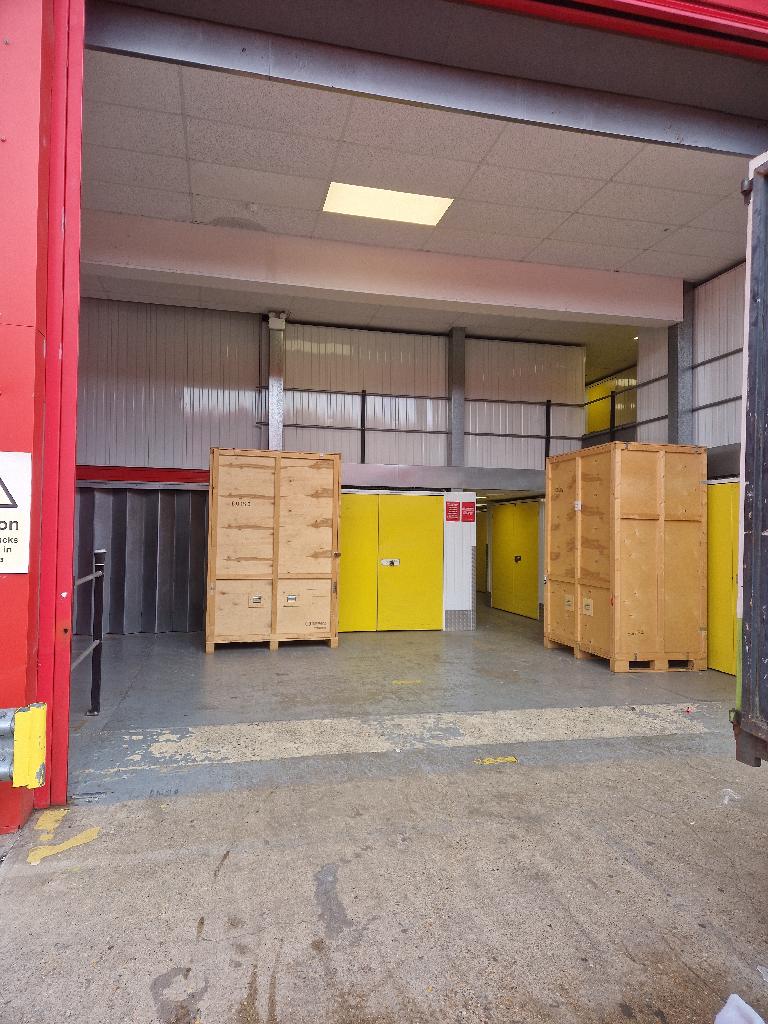
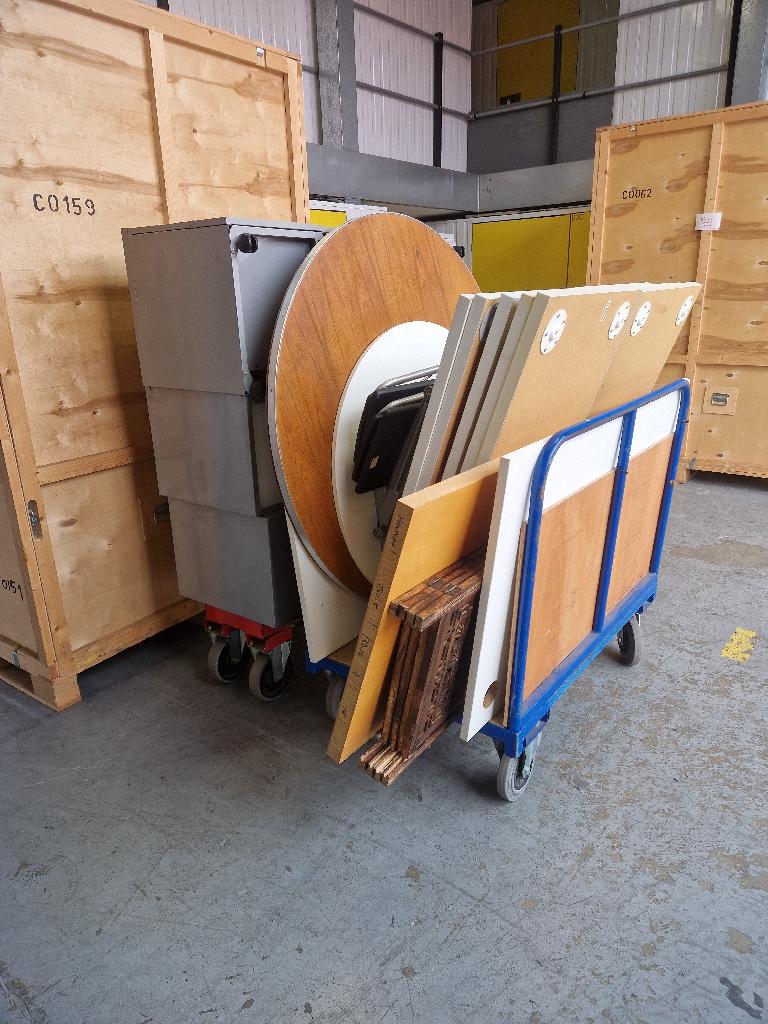
Household Storage Clearance in Peckham
At the start of this job in Peckham, the storage area looked busy and genuinely difficult to move through, with bulky items and stacked waste taking up most of the available floor space. The job was a household storage clearance in Peckham documented from a verified historical job record published on houseclearance.co, and the aim was straightforward: clear the space quickly and professionally, handle everything safely, and leave the floor tidy enough for immediate reuse afterwards. Anyone comparing options for house clearance in Peckham will recognise the scenario - what makes this case study worth reading is not that the job was unusual, it wasn't, but that it shows exactly how a cluttered storage room in Peckham gets turned back into usable space in under an hour.
The situation: The before images show multiple types of bulky clutter placed inside a storage area. The photographs show a room that could be read as either a household storage unit or a shared/communal storage space rather than a living room or bedroom, so this write-up sticks to the neutral "storage" description rather than guessing at a stronger label. The floor was partially covered by debris, and the items had been arranged in a way that narrowed the available access paths rather than leaving a clear route through the room. Mixed waste including panels, furniture-like components and assorted materials had been stacked against the walls and scattered within the room itself. In one view, boarded and framed pieces were piled close to other items; in another, a more congested corner shows scattered waste directly on the floor. This kind of build-up increases trip risk, reduces the manoeuvring space available for staff and equipment, and makes it considerably harder to keep the area properly hygienic. The overall condition of the room meant the clearance needed both careful loading and a structured plan, so items could be removed without damaging the walls, fixtures or surrounding surfaces on the way out.
How the clearance was carried out: The household storage clearance approach for this Peckham job was planned around safe access and efficient work sequencing rather than simply grabbing whatever was closest to the door. First, the team on site assessed the walk paths running from the storage location through to the collection point, working out where items could physically travel without being forced over uneven or obstructed floor. Loading routes were then prepared so that bulky pieces could be handled without dragging them across the room, which matters both for the fabric of the building and for the condition of the items themselves during the move. From there, waste was loaded systematically, working outward from the densest stacks rather than skimming the easiest pieces first and leaving the difficult ones for last.
During loading, larger components were treated carefully to avoid scratching surfaces and to keep the working area under control throughout. The team also focused on consolidating loose debris so that the floor could genuinely be fully cleared, rather than leaving a scatter of smaller pieces once the bulky items were gone. After the main items had been removed, the job continued with a sorting and final-removal check, making sure smaller fragments and residual clutter were taken away rather than left behind out of convenience. Finally, the cleanup step concentrated on returning the space to a genuinely usable condition - clearing the remaining marks and small debris that tend to get overlooked once the obviously large items have already gone.
Professionalism was central throughout the clearance. The team maintained a steady pace to complete the job efficiently, while still following safe handling practices for bulky, mixed materials rather than rushing the loading stage. The working area was managed so that movement in and out did not become disruptive to the wider building, and the end-of-job check ensured the floor space was left properly clear rather than only partially improved. That last point matters particularly in Peckham storage rooms like this one, where future access depends on the floor being genuinely free of obstructions and trip hazards rather than just tidier than before.
The result: After the household storage clearance was completed, the space was left open and ready for use. The after image shows a noticeably clearer floor area, with the bulky items removed and the layout returned to a more organised state overall. With the clutter cleared away, access paths through the room are far easier to maintain, and the space becomes genuinely more practical for storage and day-to-day use. The outcome is a complete transformation from a cluttered, constrained environment into a cleaner, safer space that supports whatever comes next for the room.
Every job on houseclearance.co is quoted on individually by licensed carriers - £490.00 was this job's agreed price, not a fixed rate for Peckham or for household storage clearance generally.
How a house clearance typically works in Peckham
The general process, not a fact about the case study above.
Work out what's staying and what's going
A storage clearance benefits from the same sorting logic as any other job: separate what's still wanted for daily use, what's worth relocating to keep in storage elsewhere, and what's simply done with. Only that last category is what actually gets loaded and removed, so pinning it down early - rather than during the visit itself - keeps the job moving.
Work to a fixed deadline where one applies
A change of use for the space, an end to a lease, or a set handover date can all put a hard limit on when the clearance needs to be finished, and jobs tied to a date like that generally need booking well ahead rather than left open-ended.
Sort before you clear
Whatever's being kept or relocated is best pulled aside before the carrier arrives, so the team removes exactly what's meant to go rather than working out the boundary between kept and cleared once they're already on site.
Donation, recycling and responsible disposal
Items left behind after sorting normally follow a rough pecking order - donation first, recycling second, and landfill only as a last resort - so a storage clearance like this one doesn't default to sending everything straight to the tip.
Final check and handover
With the load out, it's worth a last sweep of the storage area to check nothing that mattered got taken by mistake, and to confirm the floor is genuinely clear and ready for whatever the space gets used for next.
On the platform, this whole process starts the same way regardless of area: Post the job with your postcode and details, and compare quotes from licensed local carriers who cover Peckham - there's never a single fixed price set by us.
Property types and access in Peckham
What a carrier needs to know before pricing the job.
Housing around Peckham is dominated by Victorian and Edwardian terraces, many of which have been converted into two or three separate flats over the decades. A house clearance in Peckham quite often has to deal with exactly this kind of layout - a shared front door, a narrow internal staircase, and no lift - and it's one of the reasons carriers ask about floor level and lift access before committing to a quote rather than after. Closer to Rye Lane and the railway arches, a number of buildings sit directly above shops, which can mean a separate rear or side access is needed rather than a straightforward front-door collection.
A storage room like the one cleared in this case study comes with its own access questions, separate from those a converted flat raises. When the space being cleared is a storage area rather than someone's living space, working out the walk path from that location to the collection point before any loading starts matters just as much as knowing how much needs to come out - the route itself can end up being the limiting factor.
No single property type or space is inherently harder to clear than another because of what it is - but stairs, lift access and distance to the road all feed into how a carrier prices a Peckham job just as much as the volume being removed does, which is why naming these details in the job post usually gets you a quote closer to the final figure than letting the carrier discover them on arrival.
What's typically included in a clearance
Household contents and mixed waste, not a fixed list of categories.
This case study's storage area is one example of what a clearance usually deals with: furniture, boxed belongings, mixed waste and bulky items that build up in a property or storage space over time, whether that space is a flat above a Rye Lane shopfront or a room like the one pictured here. Overall volume tends to drive the quote more than the specific category breakdown does - a room full of boxed waste and a room full of heavier furniture-like components can end up taking a similar amount of time, depending on how easy the access is.
This Peckham job's own before photos give a fair sense of the typical mix - panels, boarded pieces and wheeled frames stacked alongside loose debris and bagged waste. Household jobs generally also pull in soft furnishings like old carpets and curtains, plus whatever a previous occupant left behind that the current one doesn't want kept. Naming the rough scale in the job post - one room, a full storage area, or a multi-floor house clearance - gives a carrier a starting point on volume before they've seen a single photograph, and adding photographs on top narrows the estimate further.
Items that need special handling
Worth flagging when you post, not discovering on the day.
A handful of categories fall outside what a routine clearance covers and are worth flagging before the carrier arrives: hazardous items like paint tins, solvents and gas canisters; possible asbestos, which older Peckham conversions occasionally turn out to contain; fridges and freezers, since the refrigerant gases inside them require WEEE-compliant handling; and building or renovation debris such as rubble or old kitchen units, which some carriers fold into their clearance quote while others quote for it as a separate line.
Mentioning any of these when the job is first posted lets a carrier plan the correct disposal route ahead of time, rather than discovering the issue mid-clearance and needing to requote or leave material behind. It's a minor bit of upfront detail that saves everyone time, and means the carrier turns up with the right vehicle and equipment already sorted.
What affects your price
Real quotes, not a published rate card.
houseclearance.co doesn't set a fixed price for a house clearance in Peckham - carriers quote on each job individually, and a number of practical factors shape those quotes:
- Overall volume of contents to be removed
- Access - stairs, lift availability, and distance to where the vehicle can park
- Parking or loading restrictions near the property
- Whether furniture or bulky components need dismantling before removal
- Any specialist waste requiring separate handling
- Likely number of loads or vehicle trips
- How urgent the job is
None of these work as a fixed multiplier - they're simply the details that make one job take longer, or need more vehicle space, than another. The 47-minute duration and £490.00 price for this job reflect its particular scope and access conditions, not a rate that applies to every Peckham household storage clearance. The more detail you include when you post, the less likely a quote is to shift once a carrier actually sees the space.
Storage unit access, floor level and loading routes
What actually determines how quickly a storage clearance runs.
Clearing a storage area is a different job to clearing a lived-in room, mainly because of what stands between the storage space and the vehicle outside. The photograph shows a room that reads as a household storage unit rather than a bedroom or living room, and with a space like that, the first thing a carrier needs to establish is the route out - whether that means a corridor, a lift, a set of external steps, or a shared access door that has to be propped open for the duration of the job. Ground-floor storage areas with a direct route to the road are the simplest case; anything on an upper floor, behind a lift with limited capacity, or accessed through a shared corridor used by other occupants tends to add time regardless of how much is actually being removed.
For this Peckham job, the storage area itself was the constraint rather than the distance to the vehicle. Bulky panels and stacked waste had narrowed the usable floor space down to the point where the team needed to plan a walk path through the room before any loading could start, working out which items could move first without forcing others into an even tighter corner. That kind of internal planning matters as much in a storage unit as external access does, since a room that's full right up to the door leaves no room to manoeuvre until the first few pieces are cleared.
Anyone booking a similar storage clearance is best served by describing the unit itself in the job posting: whether it's ground floor or upstairs, whether there's a lift, how wide the access corridor is, and whether the door or entrance to the storage area has any width restriction that could affect larger pieces. None of this changes whether the job can be done - it simply lets a carrier plan loading order and turn up with the right number of people rather than working it out from scratch on arrival.
Preparing for clearance day
A short checklist that helps the day run smoothly.
After a quote is accepted, doing a little groundwork beforehand tends to make the actual visit quicker and calmer, especially when shared access is involved or the space is a storage area like the one featured in this case study.
- Set aside anything being kept, clearly separated from what's being cleared
- Confirm parking or loading arrangements with the carrier in advance
- Let a building manager or site contact know a clearance visit is happening
- Flag any items needing special handling before the day itself
- Note any fixed deadline - moving date, handover date, or a change of use for the space
- Decide who will be present, or nominate a contact to give access
- Clear a walk path in advance if the room is particularly congested
If being there for the whole visit isn't possible, sorting out the arrangement with the carrier beforehand prevents any confusion on arrival. This matters especially for probate jobs, since whoever's arranging a storage or property clearance after a bereavement is often not local to Peckham at all.
Responsible disposal
Reuse and recycling before anything goes to landfill.
Emptying a storage space isn't meant to end with everything at the tip. Furniture and household goods still worth using generally go to local charities or reuse schemes first, metal, wood and electrical components are separated out for recycling, and landfill is only for what genuinely has nowhere else to go. The exact approach can shift a little from one carrier to another, so ask directly if that's something you want to compare across quotes. See responsible disposal for more on how this is expected to work across the platform.
More generally, anyone planning a similar clearance in Peckham may wish to start with the job request form and post the job with as much detail as possible - property or storage type, access, floor level, and anything needing special handling - before comparing quotes from licensed waste carriers covering the area. It's the same process regardless of whether the job is a household clearance, a storage clear-out, a probate clearance or a straightforward end-of-tenancy handover.
Questions about house clearance
Common questions, answered generally rather than for this one example.
Was this a real completed job?
Yes - the 47 minutes, the £490.00 price and Job Ref: 25 all come from an actual household storage clearance carried out in Peckham (SE15), sourced from a verified historical job record that houseclearance.co has published as-is. Nothing in the photos or the figures above has been invented for this write-up.
How much does a job like this typically cost?
This particular job cost £490.00 for 47 minutes of work clearing bulky mixed waste from an internal storage area. That price reflects this job's specific scope and access conditions rather than a fixed rate - every job on the platform is quoted on individually, so get a price estimate for your own situation.
Does houseclearance.co cover all of Peckham?
It does - Peckham sits within the broader Southwark carrier network, so regardless of which part of the area your property or storage space is in, posting a job puts it in front of nearby licensed carriers who can quote on it.
Can a carrier clear a storage room, not just a home?
The job described on this page is proof that they can - it was an internal storage area, not a flat or house. Carriers on the platform take on both, and plan access the same way in either case: work out the route to the collection point before any loading starts.
How does the quotation process actually work?
Post the job with your postcode and access details. Licensed carriers covering Peckham review the listing and submit quotes, and you choose whichever offer suits your budget and timeline - or none at all, if nothing fits.
What happens to the waste once it's collected?
The mixed waste from this kind of storage clearance is sorted rather than dumped together: usable items go to charities or reuse schemes, recyclable material is pulled out separately, and only what's genuinely beyond reuse ends up as landfill.
Is parking likely to be an issue on the day?
Streets close to Rye Lane can have controlled parking zones or loading restrictions that catch carriers out, so it's worth flagging anything of that kind at the point you post the job - that way the loading window gets built into the plan rather than worked out on the spot when the vehicle turns up.
Can I request a same-day or short-notice clearance?
That depends on carrier capacity near your Peckham postcode at the moment you post. Short-notice jobs aren't ruled out, but fewer carriers can realistically slot them in, so it pays to post as early as possible even when the job feels urgent.
Dealing with a house clearance in Peckham?
Post the job and compare quotes from licensed carriers.
Get my priceRead about house clearance coverage in Peckham, or see more case studies.