
✅ Real completed job. This case study documents a genuine completed clearance job using a verified historical job record (Job Ref: 63) provided for publication on houseclearance.co - the photos, description and figures below are real, not illustrative.
The case study: garden renovation waste clearance in Thames View
Before and after photos from a genuine completed clearance job documented in a verified historical job record.
Garden Renovation Waste Clearance in Thames View
Thames View is a residential part of Barking close to the river, within the IG11 postcode district, and it's the location for this completed garden renovation waste clearance job, part of the wider house clearance in Barking service covered on the platform. The supplied job record shows a garden that had accumulated building debris and mixed renovation waste, and the clearance focused on removing that waste so the outdoor space could be used normally again. This write-up follows the situation found on site, the process the carrier used to clear it, and the result confirmed by the after photo.
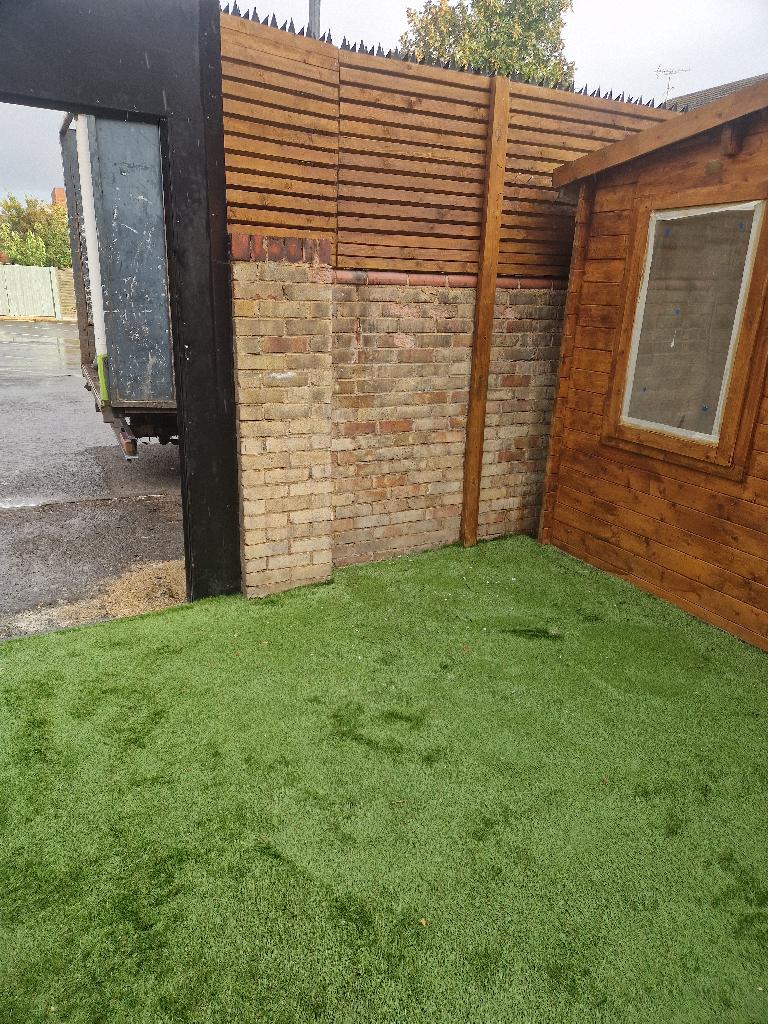
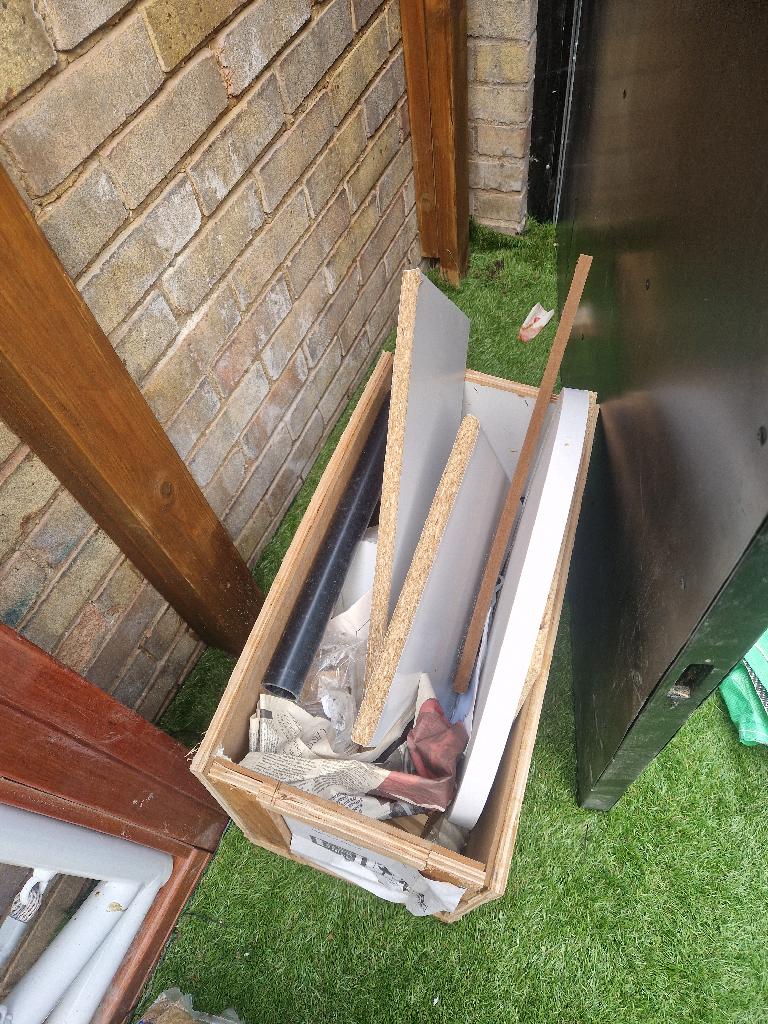
The situation: For this particular job, the before photos show waste distributed across the lawn and around its perimeter rather than gathered into a single pile. Long offcuts and boards had been laid or leaned across the ground, close to a brick wall on one side of the garden, with additional bundled material and packaging-type waste positioned nearer the doorway. A further view shows construction waste scattered more loosely across the grass itself. Taken together, the four before photos point to a garden where the debris had built up in more than one spot, reducing the usable lawn area and narrowing the paths a person could take across it without stepping over something.
The supplied job record lists the access as outdoor access for lifting and loading around the lawn perimeter, which matches what the photos show: no internal stairs or lift to plan around, but a need to lift bulky offcuts and boards without dragging them across the grass, since that risks tearing the lawn surface or scattering smaller debris further afield. Mixed building waste like this - bundled boards next to looser scattered material - generally needs a carrier to plan two things before starting: the safest route from where the waste sits to wherever the vehicle is parked, and how to keep loose fragments from spreading further while the bulkier pieces are being lifted.
How the clearance was carried out: According to the job record, the carrier worked through the site in a set sequence rather than clearing the nearest pile first and improvising from there. The first step was assessing where the waste sat and mapping the most direct route from each pile to the collection point, because a garden clearance with material against a wall and near a doorway benefits from a planned path rather than one worked out mid job. Loose materials and bulky pieces were then gathered and lifted in a controlled way, with stacked or leaning boards handled carefully so debris wasn't dragged across the grass in the process.
Once the bulkier pieces were loaded, the record notes that the carrier moved into sorting the mixed building debris, treating it as a genuine waste-management task rather than simply clearing everything from sight in one motion. Sorting mixed renovation waste this way matters because building debris and general garden waste don't always follow the same disposal route, and separating them on site - rather than afterwards - avoids extra handling later. The removal stage that followed focused on clearing the lawn and the perimeter points where debris had gathered, working through the main piles before checking the remaining ground for anything smaller left behind.
The final stage recorded for this job was cleanup: the carrier's team went back over the lawn and the areas near the brick wall and doorway to confirm nothing obstructive remained. This is a distinct step from simply carrying the bulky waste away, and it's the difference between a lawn that looks tidier and one that's genuinely clear enough to walk or sit on without watching your step. None of this is unusual for a garden clearance of this kind, but it's exactly the sequence - assess, load, sort, remove, clean up - that the supplied job record describes for Thames View.
The outcome: The after photo shows the same lawn area with the building debris removed and the ground returned to a usable, open condition. Where the before photos show boards, bundled material and scattered waste occupying most of the visible lawn, the after photo shows a clear grassed area with no piled material in view. The outcome recorded for the job was a straightforward one: the garden was made accessible again, with the specific obstruction - building debris and mixed renovation waste - removed rather than partially cleared.
Every job on houseclearance.co is quoted on individually by licensed carriers - £280.00 was this job's agreed price, not a fixed rate for Thames View, Barking, or garden waste clearance generally.
How a garden or house clearance typically works in Barking
The general process, not a fact about the case study above.
Work out what's staying and what's being cleared
Whether it's leftover building debris after a renovation, as in the Thames View job above, or the general contents of a room, it helps to separate what's being kept from what a carrier actually needs to remove before you post the job.
Describe the access honestly
A garden clearance with straightforward outdoor access, like the one above, tends to move faster than an internal clearance with stairs or a lift to plan around - mentioning which applies helps a carrier quote accurately from the start.
Flag mixed or specialist waste upfront
Building debris, old kitchen units, or anything that isn't ordinary household waste is worth naming specifically, since it may need separate sorting or disposal rather than being folded into a standard quote.
Donation, recycling and responsible disposal
Landfill is the last resort, not the first step: items that aren't being kept generally get a chance at donation first, then recycling, with only what's left over going to responsible disposal - much as the building debris and mixed renovation waste from the Thames View job above was sorted rather than loaded as one undifferentiated pile.
A finished job, not a partial one
As the Thames View job shows, a completed clearance means the space is checked over afterwards, not just cleared of its largest items - the final cleanup pass is what makes the difference between a tidier garden and a genuinely usable one.
On the platform, this whole process starts the same way regardless of area: Post the job with your postcode and details, and compare quotes from licensed local carriers who cover Barking - there's never a single fixed price set by us.
Property types and access in Thames View
What a carrier needs to know before pricing a garden or house clearance job.
Thames View sits within Barking's riverside area, in the IG11 postcode district, and includes a mix of houses with private gardens and newer flats without direct outdoor access. The job above was a garden renovation waste clearance with straightforward access around the lawn perimeter, which is one of the more predictable access types a carrier deals with - no stairs, no lift, no shared hallway to protect, just a route from the pile to wherever the vehicle can be loaded.
Not every job in the area is this simple, though. A property backing onto a narrow side passage rather than a driveway can mean a longer route from waste to vehicle than it first appears, and debris stacked against a wall or fence, as it partly was in the Thames View job, benefits from being flagged in advance so a carrier can plan the safest way to lift it without damaging the boundary.
For a house clearance in Barking more generally, rather than an outdoor-only job like this one, access usually becomes a bigger factor - converted terraces near the town centre often have narrower internal routes than a garden clearance, worth describing separately from any outdoor considerations when you post.
What's typically included in a clearance
Building debris and garden waste, alongside the usual household items.
The Thames View job above was a garden renovation waste clearance specifically - building debris and mixed renovation waste removed from the lawn and its perimeter. More generally, clearances in Barking cover the usual accumulation of furniture, appliances, boxed belongings and household items that builds up in a lived-in property, whether that's a single flat or an entire house.
Garden waste, sheds and outbuildings can usually be included alongside internal rooms, provided they're mentioned when the job is posted, since outdoor areas aren't automatically assumed to be part of a standard indoor clearance quote. What tends to drive the quote is the overall volume involved rather than the specific mix of items - a garden with several piles of debris, like the one above, can realistically take about as long to clear as a cluttered room, depending on how the waste is arranged and how straightforward the access is.
Old carpets, curtains and general soft furnishings are usually included alongside bulkier items in a full house clearance, as is anything left behind by a previous occupant. Describing the rough scale of the job - a single garden clear-out, a full flat, or an entire multi-room house clearance - helps a carrier judge volume before they even see photographs, and photographs on top of that description tend to sharpen the estimate further still.
Items that need special handling
Worth flagging when you post, not discovering on the day.
Building debris, like the waste cleared in the Thames View job above, generally needs mentioning specifically when a job is posted, since some carriers include a modest amount within a wider clearance and others price it separately depending on how much there is and what it's made of. Beyond building waste, a short list of other categories sits outside a routine clearance and usually needs flagging upfront: hazardous materials such as paint tins, solvents and gas canisters; anything suspected of containing asbestos, which can occasionally turn up in older Barking properties during renovation-linked work; and large fridges or freezers, which require WEEE-compliant handling because of the refrigerant gases they contain.
Naming any of these when the job is first posted, rather than waiting for the carrier to spot them on arrival, is what let the Thames View team price the mixed building debris correctly from the start instead of needing a second look once they were already on the lawn. The same applies to garden-specific finds - old paint tins left in a shed, or a fridge dragged outside during a renovation - which are easy to miss until someone is standing next to them.
Electrical items more broadly fall under the same WEEE-compliant disposal rules, since they can't legally be landfilled untreated. That covers everything from televisions and microwaves through to small desk lamps and kitchen gadgets, and a licensed carrier will already have a route for handling them correctly without you needing to sort them out separately beyond pointing them out.
What affects your price
Real quotes, not a published rate card.
houseclearance.co doesn't set a fixed price for a house clearance in Barking - carriers quote on each job individually, and a number of practical factors shape those quotes. The Thames View job above was completed in 39 minutes for £280.00, but that figure reflects the specific volume and access of that job, not a rate that applies to garden clearances generally. Factors that typically shape a quote include:
- Overall volume of waste or contents to be removed
- Whether access is internal (stairs, lift) or outdoor only, as in the job above
- Parking or loading restrictions near the property
- Whether items need dismantling before removal
- Any specialist waste requiring separate handling, such as building debris
- Likely number of loads or vehicle trips
- How urgent the job is
None of these work as a fixed multiplier - they're simply the details that make one job take longer, or need more vehicle space, than another. The more of this you include when you post, the less likely a quote is to shift once a carrier sees the property or garden in person. Timing plays a part too: a clearance booked with a few days' notice generally gives carriers more flexibility than one needed the same day, which narrows the pool realistically able to take it on - neither is wrong, but it helps to know which trade-off you're making before comparing offers.
Rubble, boards and garden waste sorting
Why mixed renovation and garden waste is handled differently from household contents.
A job like the Thames View clearance combines two waste streams that don't always follow the same route once they leave the garden: building-related material such as boards, offcuts and general construction debris, and the garden itself, which can add its own scattered clutter around a lawn's perimeter. The before photos show exactly this mix - bundled boards and packaging-type waste near the doorway, looser construction debris across the grass, and material stacked close to a brick wall. Sorting this kind of mix on site, as happened in this job, matters because rubble and heavier building material can be reused or recycled through different routes than general garden waste.
Weight is a bigger factor in a job like this than it would be for a room of household clutter. Boards, offcuts and rubble-type debris are considerably heavier for their size than boxed belongings or furniture, which affects how a carrier plans the number of loads and how carefully they lift bulkier pieces rather than dragging them across a lawn, where dragging risks tearing the grass or leaving a visible scar across the surface that wasn't there before the clearance began.
Access around a garden with debris against a wall or fence, as in this case, also shapes how the job is approached. A carrier typically maps the shortest safe route from each pile to the collection point before starting to lift anything, since a boundary-adjacent pile needs a different angle of approach to one sitting in the open middle of a lawn. Where renovation waste and garden debris are mixed together across more than one area, as they were here, this kind of route planning becomes more important, not less, because it reduces the number of times a carrier has to cross the same ground while loading.
Odd or restricted access-a narrow side passage instead of a driveway, or a gate that only opens partway-can add time to a garden clearance in a way that isn't always obvious from a description of the waste alone. Mentioning any such constraint when posting a similar job, alongside the mix of rubble, boards and garden waste involved, generally produces a more accurate quote than leaving a carrier to discover the access on arrival.
Preparing for clearance day
A short checklist that helps the day run smoothly.
Once a quote has been accepted, a bit of preparation generally makes the visit itself faster and less stressful, whether the job is an outdoor clearance like the one above or a full internal house clearance.
- Set aside anything being kept, clearly separated from what's being cleared
- Confirm parking or loading arrangements with the carrier in advance
- Note whether access is internal, outdoor, or both
- Flag any items needing special handling, including building debris, before the day itself
- Note any fixed deadline - moving date, handover date, or sale completion
- Decide who will be present, or nominate a contact to give access
- Keep a note of any items you might want photographed before removal
If you won't be on site the whole time, sort out who greets the carrier and who signs off the job before the day itself - this matters more than usual for probate work, where the person handling the clearance is often coordinating from somewhere else entirely. For a garden or outdoor job like the Thames View clearance, it's also worth walking the perimeter once beforehand, checking along fences and walls, since debris tucked into a corner is easy to overlook until the carrier's already loading the van.
Responsible disposal
Reuse and recycling before anything goes to landfill.
The job record for Thames View shows sorting happening as its own stage, sitting between the final removal and the cleanup pass rather than being skipped in the rush to load the van. That order matters for mixed building debris specifically, since rubble, boards and packaging waste don't all follow the same route once they leave the garden - some can be reused or broken down for recycling, and only whatever's left after that goes to landfill. The full detail on how this is expected to work platform-wide is covered on the responsible disposal page.
More generally, anyone planning a similar clearance in Barking may wish to start with the job request form and post the job with as much detail as possible - property or garden layout, access, and anything needing special handling - before comparing quotes from licensed waste carriers covering the area. It's the same process regardless of whether the job is an outdoor clearance, a full house clearance, a probate clearance or a straightforward end-of-tenancy handover.
Questions about house clearance
Common questions, answered generally rather than for this one example.
Was this a real completed job?
Yes. The photos, duration, access notes and price above come from a completed job using a verified historical job record provided for publication on houseclearance.co, sourced from Thames View in Barking (IG11). Nothing in the case-study section is illustrative or invented.
Does building debris cost more to clear than household waste?
It can, depending on the material and how much there is, because some carriers price it separately from a standard household clearance. Naming it specifically when you post - as with any renovation or garden waste - helps ensure the quote you receive reflects the actual job rather than being adjusted once a carrier arrives.
Can a garden-only clearance be booked without a full house clearance?
Yes. Outdoor-only jobs, like the one described above, are posted and quote on in the same way as an internal clearance - you simply describe what needs removing and where it is, and carriers covering Barking quote accordingly.
How does the quotation process actually work?
Post the job with your postcode and access details. Licensed carriers covering Barking review the listing and submit quotes, and you choose whichever offer suits your budget and timeline - or none at all, if nothing fits.
Is parking likely to be an issue near Thames View?
It can vary street to street. Mentioning any known restrictions near your property when you post lets the carrier plan their loading window rather than losing time once they arrive.
Does mixed rubble and garden waste need separate sorting?
Yes-building-related debris such as boards and rubble generally follows a different recycling or disposal route from general garden waste, so a carrier will typically sort the two on site rather than clearing everything into a single mixed load.
Can turf, soil and plant cuttings go in the same load as rubble?
Not usually as one mixed pile. Green waste such as turf, soil and plant cuttings is treated differently from hard building materials like broken paving or brick rubble, so a carrier will typically keep the two separate on site even when they're being cleared from the same garden on the same visit. Flagging the rough split between green waste and rubble when you post helps the carrier plan for both before they arrive.
What happens to the waste once it's removed?
Reputable carriers will typically donate usable items, recycle what they can, and dispose of the rest responsibly through licensed waste routes. Carriers will be required to provide valid waste carrier registration before accepting live jobs, and you can ask any carrier about their donation and recycling process before accepting a quote.
Dealing with a house or garden clearance in Barking?
Post the job and compare quotes from licensed carriers.
Get my priceRead about house clearance coverage in Barking, or see more case studies.